Measuring Guest Engagement: A Practical Guide for Nassau
Last Updated: November 9, 2026
Quick Summary
Guest engagement measures how actively guests take part in an event, beyond simply counting who arrived. Track three layers: attendance, participation in activities such as a photo booth or dance floor, and guests' overall experience. A participation rate, the share of guests who used at least one activity, is a simple starting metric.
- Count arrivals in 30-minute blocks to find your peak hours.
- Participation rate equals guests who used an activity divided by total attendance.
- Set two or three measurable goals before the event begins.
- Keep post-event surveys to three questions maximum.
- Send a short thank-you survey link within 48 hours of the event.
Table of Contents
- What Guest Engagement Means at a Nassau County Event
- Engagement Metrics Beyond Attendance
- Tracking Attendance and Participation on the Night
- Measurement Before, During, and After the Event
- Collecting Guest Feedback Without Slowing the Party
- Corporate Event Lead Capture Strategies That Respect Privacy
- A Measurement Plan by Event Size and Type
- Low-Cost Tools and Accessible Engagement Tracking
- Book Your Next Nassau Event With Engagement in Mind
- Frequently Asked Questions
What Guest Engagement Means at a Nassau County Event
Guest engagement is how much your guests actually take part in your event. It goes beyond how many people walked through the door. A packed room where guests stand around the bar is different from one where they dance, pose for photos, and talk to strangers.
For Nassau County events, this matters more than most organizers expect. Guests travel from across Long Island, and they arrive with a clear sense of what a good night looks like. Engagement is the measure of whether they got that night.
Think of engagement in three layers:
- Attendance: Who showed up and when
- Participation: Which activities guests joined, such as a photo booth, a dance floor, or a raffle
- Experience: How guests felt about the night and whether they would come back
Each layer tells you something different. Attendance tells you about your invitations. Participation tells you about your activities. Experience tells you about the overall night. Track all three, and you have a complete picture.
Engagement Metrics Beyond Attendance
Attendance is the easiest number to count, and it is also the least useful on its own. A guest who stands at the entrance for ten minutes and leaves is counted the same as one who stays until close.
Better metrics look at what guests do once they are inside:
- Participation rate: The share of guests who used at least one activity
- Dwell time: How long guests stay in key areas, such as the booth or the dance floor
- Repeat visits: Guests who return to an activity during the night
- Survey response rate: The share of guests who answer a short post-event question
Keep the math simple. If 120 guests attend and 70 use the photo booth, your participation rate is about 58%. That number is easy to explain to a client or sponsor, and it gives you something to compare against next time.
Tracking Attendance and Participation on the Night
Good tracking does not need to slow the party down. Set up your system before doors open, then let it run in the background.
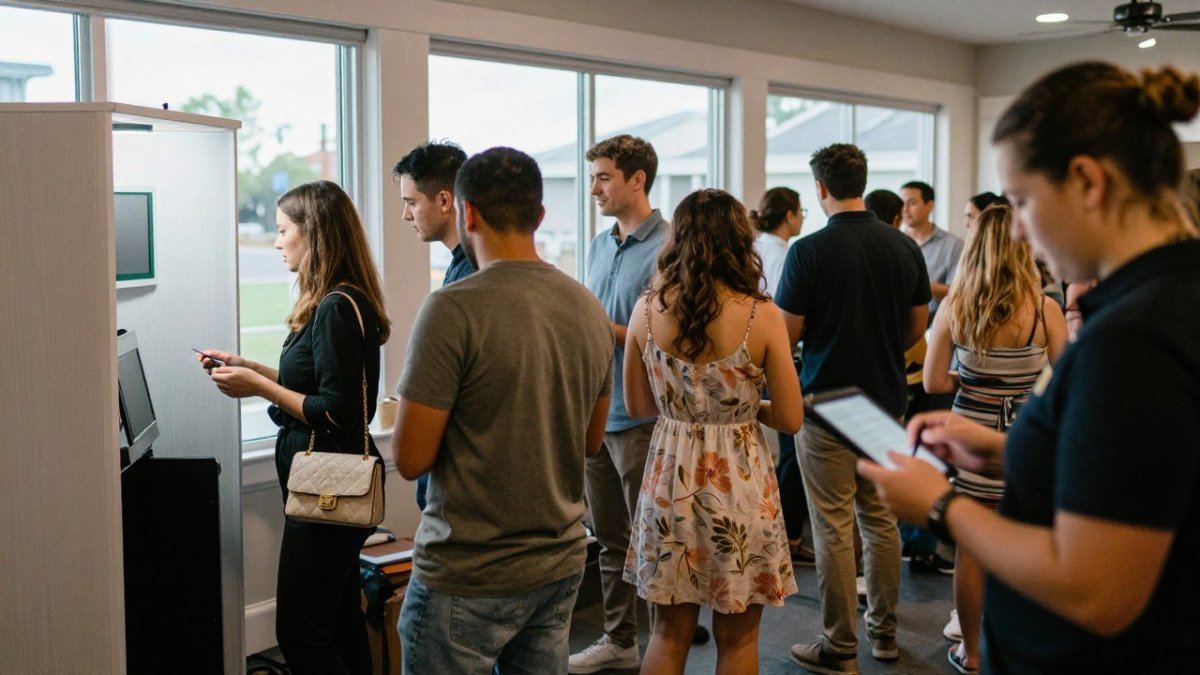
Counting Arrivals and Peak Hours
Count arrivals in 30-minute blocks. This shows when your room fills up and when it empties. Most Nassau events see a rush in the first hour, then a second wave after dinner.
A simple method works well:
- Assign one person to the door with a clicker or a shared spreadsheet
- Log the time and count every 30 minutes
- Note any gaps, such as when dinner service pulls guests away
These peak hours help you plan staffing, bar service, and activity timing. If your photo line is longest at 9:00, you know where to add a second attendant.
Measuring Photo Booth Participation
A photo booth can give you a useful participation signal. Ask your booth provider whether they can supply session counts at the end of the night, and compare that number with your headcount.
Here is what to track:
- Total sessions: The number of photo strips or sessions taken
- Unique guests: Based on digital sharing, such as text or email addresses entered, if your booth provider reports it
- Peak sessions: The busiest 30-minute window
Photo booth lines can also show how well your activation works. If guests keep queuing, the activity is drawing a crowd. Learn what drives booth participation and how to keep lines moving all night.
Our booths at Photobooth NYC share digital galleries after the event, so you can check participation against your guest list. To discuss how we set up for your venue, visit our check availability page.
Measurement Before, During, and After the Event
Measurement works best as a three-stage process, not a single survey at the end.
Before the event: Set your goals. Decide which two or three numbers matter most, such as participation rate, survey responses, or lead count. Write them down so you can compare results later.
During the event: Track the simple numbers: arrivals, peak hours, and activity sessions. Keep your system light so it does not distract from the event.
After the event: Gather feedback, review your numbers against your goals, and note what worked. Send a short thank-you message with a survey link within 48 hours, while the night is still fresh for guests.
Many organizers skip the "before" stage. Our step-by-step guide to measuring activation ROI walks through setting goals before the event. That is a mistake. Without a clear goal, you cannot tell whether a result is good or bad.
Collecting Guest Feedback Without Slowing the Party
Guests will not fill out a long form at a party. Keep feedback short, and make it easy to answer.
Try these approaches:
- QR code surveys: Place a code on table cards or on the photo booth prints. Guests scan it and answer two or three questions on their phones.
- Text follow-ups: Send one message the next morning with a single rating question, such as "How was the night? Reply 1 to 5."
- Quick prompts: Ask one question at the booth, such as "What was your favorite moment?"
Keep the survey to three questions maximum. Ask about overall experience, the one thing they would change, and whether they would attend again. A short survey with a 40% response rate gives you more useful data than a long one that nobody finishes.
Corporate Event Lead Capture Strategies That Respect Privacy
For corporate events, lead capture is often a goal. It is also where privacy matters most. Guests need to know what they are signing up for, and they need a clear way to say no.
Follow these practices:
- Ask for consent clearly. Use a checkbox or a short line that says what you will send and how often.
- Collect only what you need. A name and email address is usually enough for follow-up.
- Explain the value. Tell guests they will receive event photos or a recap, not a flood of sales emails.
- Honor opt-outs fast. Remove anyone who declines from your list the same day.
Lead capture works best when it feels like a service. See how photo booth lead capture turns guest interaction into qualified contacts. A guest who gets their photos by email is more likely to open the next message from your company.
A Measurement Plan by Event Size and Type
Size alone is a poor guide. A 250-guest wedding and a 250-guest brand activation need different numbers, even though the headcount is identical. Build your plan around two questions: what decision will this data inform, and who is going to read it? Then pick a short list of metrics that answer those questions.
Use this framework to choose your core metrics by event type:
| Event Type | Primary Question | Core Metrics | Feedback Method |
|---|---|---|---|
| Wedding or private celebration | Did guests enjoy the night and stay engaged? | Participation rate, dwell time at activities, repeat visits, satisfaction rating | QR code on table cards and photo prints, one text follow-up |
| Corporate gala or fundraiser | Did we hit our program and donor goals? | Arrivals by half-hour, activity sessions, lead or pledge count, survey response rate | Booth lead capture with consent, short post-event survey, CRM export |
| Brand activation or conference | Did we reach the right people and capture qualified leads? | Unique participants, lead count, session-to-lead conversion, follow-up opt-in rate | Badge scan or booth form, one-question exit prompt, email recap |
| Community or festival event | Did we draw a crowd and keep them moving? | Peak hours, activity throughput, first-time vs. returning guests, verbal feedback themes | Door counter, staff observation sheet, paper comment cards |
| Bar or bat mitzvah | Did the guest of honor and their friends stay involved? | Booth sessions, dance floor presence, repeat visits, parent satisfaction | Verbal check-ins, one short survey to parents, booth session log |
Match the depth of your measurement to the size of the event and the size of the budget. A 50-guest team dinner can run on a paper tally sheet and three verbal questions. A 1,200-guest gala needs a door counter, a booth session report, a consent-based lead form, and a survey that goes out within 48 hours.
A common pattern is to over-instrument small events and under-instrument large ones. For a 100-guest private party, two metrics, participation rate and one satisfaction question, are enough. For a 300-plus guest corporate event, you want the full funnel: arrivals, activity sessions, unique leads, opt-in rate, and survey responses. Anything in between can run on a shared spreadsheet plus the booth session log.
Watch out: if you pick metrics after the event, you will end up reporting whatever numbers happen to exist rather than the ones that answer your client's or sponsor's question. Write the two or three numbers down before load-in, and tell your booth attendant and door staff which ones they are responsible for capturing.
For Nassau County venues specifically, build the plan around the room. A country club ballroom with a separate cocktail hour space will show two arrival peaks; a hotel ballroom with a single entrance will show one. A venue with a tight load-in window and a freight elevator means your booth attendant has less setup time, so the session log needs to be simple enough to run from the first guest through strike. If your event is in Garden City, Melville, or Rockville Centre and the room has a dedicated photo area, plan for higher booth throughput and a longer peak window than a cramped cocktail setup in a Manhattan-style space.
Low-Cost Tools and Accessible Engagement Tracking
You do not need expensive software to measure engagement well. What you do need is a setup that captures data transparently, works for guests who do not use smartphones comfortably, and does not create a privacy problem you have to clean up later.
A Tool-Neutral Setup That Costs Little
- QR code surveys: A free QR generator linked to a short form. Print the code on table cards, menu inserts, and photo strips. Keep the form to three questions so guests can finish it in under a minute.
- Shared spreadsheets: One tab for arrivals by half-hour, one for activity counts, one for survey responses. Share it with your door staff and booth attendant before doors open.
- Paper observation sheets: A clipboard with a simple tally grid for staff to note peak lines, activity bottlenecks, and guest comments. This is your fallback when Wi-Fi is unreliable, common in older Nassau venues with thick walls or basement ballrooms.
- Text follow-ups: One message the next morning with a single rating question. Use a business messaging account, not a personal phone, so opt-outs are easy to honor.
- Booth session reports: Ask your photo booth provider whether they can supply a session count and a unique-guest count based on digital sharing. If they can, that gives you a participation number without asking guests to do anything extra.
Consent and Data Retention in Plain Terms
Collect only what you will actually use, and tell guests what you are doing with it.
- Ask before you collect. A checkbox or a one-line notice on the form, what you will send, how often, and how to stop, is enough for most event follow-up. Do not pre-check the box.
- Separate the photo from the marketing list. A guest who wants their photo emailed is not automatically opting in to a sales list. Keep those two consents distinct.
- Set a retention window. Decide how long you will keep survey responses and lead data, write it down, and delete on schedule. A short window, long enough to send the recap and report results, no longer, is easier to defend and easier to manage.
- Honor opt-outs the same day. Remove anyone who declines from your list before the next send.
- Brief your staff. The door person and booth attendant are the ones who will be asked "what is this for?" Give them a one-sentence answer.
Accessibility and Offline Alternatives
Not every guest uses a smartphone comfortably, and not every guest wants to be on camera or on a list. Build in alternatives so participation numbers reflect the whole room, not just the most connected guests.
- Paper version of every digital form. Same three questions, same consent line, a drop box near the exit.
- A staffed help point. Station one person near the booth or check-in who can scan a code, read a question aloud, or hand over a paper card.
- Language access. If your guest list includes multiple languages, print the survey in the two most common ones and keep the digital form to plain, short sentences.
- Observation as a metric. For guests who will not fill out anything, staff observation, who is dancing, who is at the booth, who leaves early, is legitimate engagement data. Note it on the observation sheet in the same half-hour blocks as arrivals.
- Quiet alternatives. Some guests will not want their photo taken. A guest book, a comment card, or a short verbal check-in at the door gives them a way to participate in the measurement without participating in the activation.
Watch out: if your only feedback channel is a QR code, your response rate will quietly exclude older guests, guests without data plans, and guests who simply do not want to scan. Pair every digital channel with a paper or verbal one, and report the two together so the number you present reflects the room.
Book Your Next Nassau Event With Engagement in Mind
Engagement does not happen by accident. It comes from a clear plan, a good activity, and a simple way to measure what happened. Set your goals before the event, track the numbers that matter, and use what you learn to improve the next one.
If you are planning a corporate gala, wedding, or private celebration in Nassau County or anywhere on Long Island, a photo booth is one of the easiest ways to drive participation and capture the night. Our team provides a trained attendant on site and a digital gallery after the event, so you can focus on your guests. Check availability for your date and start planning your event today.
Frequently Asked Questions
How do you measure event engagement?
Start with a small set of measures you can actually collect: how many guests arrived and when, how many used the photo booth or other activities, how many completed a short survey, and how many shared content afterward. Compare these against your goals, such as the number of new contacts you want or the satisfaction score you are aiming for. Record the same measures at each event so you can compare results over time rather than judging one night in isolation.
What are the best metrics for guest engagement at local events?
Useful metrics include participation rate (guests who took part divided by total guests), survey response rate, average satisfaction rating, number of lead form completions for corporate events, and social shares or digital gallery views after the event. Choose two or three that match your goal. A wedding may care most about satisfaction and memorable moments, while a corporate event may prioritize lead capture and follow-up contacts.
How can photo booth data help track engagement at corporate events?
A photo booth can show when activity peaks, how many guests participated, and how many people opted in to receive their photos by email or text. Those opt-ins give you a contact list for follow-up. Pair the booth data with a short post-event survey to understand why guests engaged, not just how many did.
Is it legal to collect guest email addresses at an event?
Collecting contact details is generally allowed when guests choose to provide them and you explain how the information will be used. Tell guests what you will send them, offer a clear opt-out, and store the data securely. Check your own privacy policy and any sponsor or venue agreements before sharing attendee lists, and consult an attorney if you have specific compliance questions.

