
How to Plan a Successful Product Launch Event
Table of Contents
- Define Your Product Launch Event Objectives and KPIs
- Identify and Segment Your Target Audience
- Build a Product Launch Event Checklist
- Create an Event Planning Timeline Template
- Allocate Budget and Resources
- Select Your Venue and Digital Platform
- Develop Your Brand Narrative and Messaging
- Creative Product Launch Event Ideas to Drive Engagement
- Execute Event Promotion and PR Strategy
- How to Measure Event ROI and Post-Launch Performance
- Frequently Asked Questions
Last Updated: September 23, 2026
Define Your Product Launch Event Objectives and KPIs
Your product launch event won't succeed without clarity on what success looks like. Before you book a venue or send invitations, define specific, measurable objectives that tie directly to your business goals. Are you driving lead generation, building brand awareness, generating media coverage, or converting prospects into customers? Each objective demands different planning, different audiences, and different metrics.
Key performance indicators transform vague goals into trackable outcomes. Common KPIs for product launch events include attendee count, qualified leads captured, social media impressions, press mentions, and post-event conversions. Set targets for each. If your goal is lead generation, decide how many qualified prospects you need to justify the investment. If it's brand awareness, track media mentions and social reach during and after the event.
Document these objectives in writing before moving forward. Share them with your team and stakeholders. This alignment prevents scope creep and keeps decision-making focused when trade-offs arise, and they will. A product launch event checklist should reference these objectives so every planning decision connects back to measurable outcomes.
Identify and Segment Your Target Audience
Not everyone needs to attend your product launch event. Precision beats volume. Define who benefits most from seeing your product in action: existing customers, prospects in a specific industry, media and influencers, internal stakeholders, or a combination. Each segment has different needs, different pain points, and different reasons to show up.
Segment your audience intentionally. A product launch event targeting enterprise buyers looks nothing like one targeting consumers. Enterprise audiences want technical depth, ROI discussion, and one-on-one time with your team. Consumer audiences want experience, social sharing moments, and entertainment value. Your venue choice, agenda, messaging, and even the tone of your invitations should reflect these differences.
Use your CRM data and customer feedback to build these segments. How many people fall into each category? What channels do they use? What objections do they typically raise? The answers shape everything that follows, from budget allocation to venue selection to the specific messaging you'll use in event promotion.
Consider audience segmentation when planning the physical or digital platform experience. A Branded Photo Booth for Brand Activations can be tailored to segment attendee engagement by role. This tiered approach keeps high-value stakeholders engaged while maintaining energy throughout the event.
Build a Product Launch Event Checklist
A comprehensive product launch event checklist prevents critical tasks from slipping through the cracks. Start with these core categories and expand based on your specific needs:
Pre-Event Planning (8-12 weeks before):
- Define objectives and KPIs
- Identify target audience segments
- Set event budget and resource allocation
- Select venue or digital platform
- Develop brand narrative and messaging
- Create event promotion strategy
- Secure necessary permits or venue contracts
Logistics and Setup (4-8 weeks before):
- Finalize attendee list and send invitations
- Arrange catering, AV, and technical setup
- Design event agenda and speaking schedule
- Create marketing collateral
- Coordinate with PR and media outreach
- Arrange transportation or parking
- Plan for contingencies and crisis management
Execution (1-2 weeks before and during):
- Conduct final walkthrough of venue
- Test all technical equipment
- Brief your team on roles and timing
- Monitor RSVPs and adjust logistics
- Capture photos and video during the event
- Engage attendees and gather feedback
- Execute post-event follow-up within 48 hours
Post-Event (immediately after):
- Collect attendee feedback via survey
- Process and organize event photos and video
- Follow up with leads and contacts
- Analyze event performance against KPIs
- Document lessons learned
- Share results with stakeholders
| Checklist Phase | Key Tasks | Timeline |
|---|---|---|
| Planning | Objectives, audience, budget, venue | 8-12 weeks |
| Logistics | Invitations, catering, AV, collateral | 4-8 weeks |
| Execution | Walkthrough, testing, team briefing | 1-2 weeks |
| Follow-up | Surveys, leads, photos, analysis | Immediately after |
Create an Event Planning Timeline Template
A product launch event timeline keeps your team coordinated and ensures nothing gets overlooked. Work backwards from your launch date to assign realistic deadlines for each phase.
12 Weeks Before: Lock in your venue or digital platform. Finalize budget and resource allocation. Begin developing your brand narrative and core messaging. Start identifying and reaching out to potential speakers or partners.
8-10 Weeks Before: Finalize your target audience segments and begin building your invitation list. Create your event agenda and speaking schedule. Brief your creative team on brand requirements so they can begin designing marketing collateral and custom event materials.
6-8 Weeks Before: Launch event promotion across all channels. Send media advisories to press contacts. Confirm catering, AV, and technical requirements with your venue. If using a photo booth or other experiential elements, book those services now, premium vendors fill up quickly.
4-6 Weeks Before: Send formal invitations to attendees. Confirm speaker availability and technical requirements. Begin designing event-day materials: signage, programs, branded templates. If you're working with a Corporate Event Photo Booth Rental or similar vendors, finalize customization details like backdrop design, color grading, and branded print templates.
2-4 Weeks Before: Follow up on RSVPs and adjust logistics based on confirmed attendance. Conduct final briefing with your team on roles, timing, and contingency plans. Test all technical equipment. Brief speakers and presenters on timing and audience expectations.
1 Week Before: Final walkthrough of the venue. Confirm all vendor arrivals and setup times. Brief your team again on day-of responsibilities. Prepare crisis management protocols in case of technical failures or unexpected issues.
Day of Event: Arrive early for setup. Conduct final technical checks. Brief your team 30 minutes before doors open. Capture photos and video throughout. Engage directly with attendees and gather informal feedback.
Within 48 Hours: Send thank-you emails to attendees. Process event photos and make them available to attendees. Follow up with qualified leads. Begin collecting formal feedback via survey.
Allocate Budget and Resources
Budget allocation determines what's possible. Start by defining your total budget, then break it into categories: venue, catering, AV and technical, talent or speakers, marketing and promotion, experiential elements (like photo booths), contingency, and staff time.
Venue costs typically consume 20-30% of your budget. Catering ranges from 15-25%. AV and technical setup can run 10-20% depending on complexity. Speaker fees or talent vary widely. Marketing and promotion should receive 10-15% to ensure your target audience actually shows up.
Experiential elements like branded photo booths deserve consideration in your budget. They drive engagement, create social media content, and give attendees a memorable takeaway. A Signature Photo Booth Package with dual-printer capability, custom branding, instant prints, and digital sharing can drive significant attendee engagement and post-event social amplification.
Resource allocation extends beyond money to include staff time, vendor coordination, and creative effort. Assign clear ownership: who manages the venue relationship? Who owns marketing and promotion? Who coordinates with speakers? Who manages day-of logistics? Unclear ownership leads to missed deadlines and duplicated effort.
Select Your Venue and Digital Platform
Venue selection shapes every downstream decision. Start by clarifying: will this be an in-person event, hybrid, or fully digital? Each model has different logistics, different engagement dynamics, and different ROI implications.
For in-person events, prioritize venues that align with your brand narrative. A luxury brand launching a premium product needs a venue that reinforces that positioning. A tech startup might choose a creative loft or modern conference center. Visit potential venues in person. Walk the space. Test the lighting. Check internet speed. Understand load-in windows and setup constraints.
Hybrid events require strong technical infrastructure: multiple camera angles, high-quality audio, screen sharing, breakout room capability, and reliable internet. Test your platform (Zoom, Teams, or a specialized event platform) weeks in advance. Hybrid events are harder to execute well than they appear, so budget extra time for technical rehearsal.
Digital-only events eliminate venue constraints but require different engagement strategies. Without physical presence, attendees disengage faster. Build in interactive elements: live polls, Q&A sessions, breakout discussions, and post-event networking opportunities. Consider how you'll use video, screen sharing, and chat to maintain energy.
Regardless of format, consider how attendees will experience your product. Will they see it demoed on stage? Will they interact with it hands-on? Will they experience it through video? Experiential elements like interactive photo booths or branded installations create memorable moments that attendees share on social media. These elements are easier to execute in-person but can be adapted for hybrid events through virtual experiences or pre-event video content.
Develop Your Brand Narrative and Messaging
Your brand narrative is the story your product launch event tells. It's not a product spec sheet, it's the reason your product matters to your audience. What problem does it solve? How does it change the customer's life or business? What makes your approach different?
Develop a clear narrative arc: situation (the problem your audience faces), complication (why existing solutions fall short), resolution (how your product solves it), and outcome (the benefit or transformation). This narrative should thread through your invitation copy, your speaking schedule, your visual design, and your messaging at every touchpoint.
Create messaging guidelines that your entire team uses consistently. What are the three core value propositions? What language resonates with each audience segment? What tone does your brand use? Document these so your speakers, your marketing team, and your event production team all deliver the same message.
Customize messaging for different audience segments. Your existing customers care about new capabilities and how to maximize value. Prospects care about competitive advantage and ROI. Media care about the news angle and what makes this launch noteworthy. Develop specific talking points for each group.
Visual identity matters. Your backdrop, signage, color scheme, and branded materials should reinforce your narrative. If you're using a photo booth experience, whether a traditional booth or a custom installation, ensure the backdrop, props, and branding align with your event theme. Custom color grading and print templates can match any brand palette, ensuring that attendee photos reinforce your brand aesthetic even after the event ends.
Creative Product Launch Event Ideas to Drive Engagement
Engagement transforms attendees from passive observers into active participants. The best product launch events create moments worth talking about, moments attendees share on social media, mention in conversations with colleagues, and remember months later.
Live product demonstrations keep audiences focused and curious. Don't just describe your product, show it working in real time. Better yet, invite attendees to try it themselves. Hands-on experience creates conviction that passive observation never achieves.
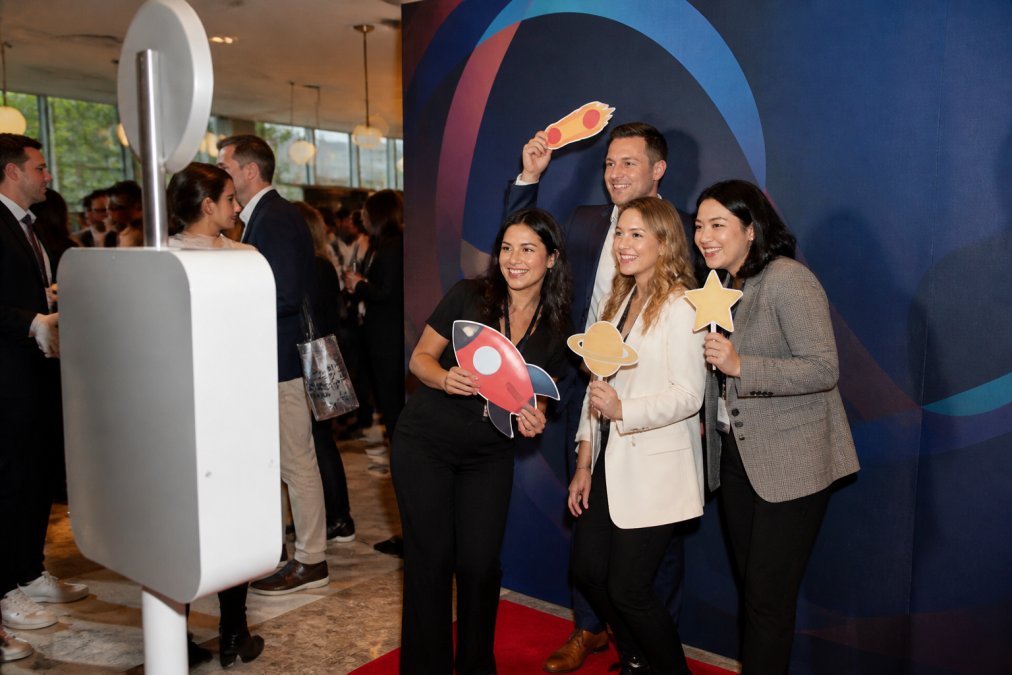
Interactive installations create Instagram-worthy moments. A branded photo booth, for example, lets attendees capture themselves with your product. The instant prints and digital sharing (via QR code, text, or email) extend your reach beyond the physical event. Attendees become brand ambassadors, sharing photos with their networks and amplifying your message.
Networking sessions structured by industry or role encourage meaningful conversations. Unstructured mingling often leaves attendees standing awkwardly. Structured networking, speed-dating style conversations, industry roundtables, or facilitated introductions, creates genuine connections and increases the likelihood that attendees follow up after the event.
Live social media integration amplifies your reach. Create a branded hashtag and display the social feed on screens throughout the venue. Encourage attendees to post photos, reactions, and insights. This creates FOMO for people who didn't attend and extends your event's reach far beyond the room.
Surprise moments, unexpected speakers, product features revealed mid-event, or special performances, keep energy high. Attendees remember events where something surprised them. Plan for at least one moment of genuine surprise or delight.
Execute Event Promotion and PR Strategy
Event promotion starts weeks before doors open. Your goal is twofold: fill the room with your target audience and generate media coverage that extends your reach.
Email promotion to your existing customer and prospect lists is your most direct channel. Segment your emails by audience: existing customers get messaging focused on exclusive early access and new capabilities. Prospects get messaging focused on competitive advantage and ROI. Make your call-to-action clear and make registration simple.
Social media promotion builds awareness and creates anticipation. Post behind-the-scenes content as you prepare. Share speaker bios and agenda highlights. Create countdown posts as the event approaches. Use your branded hashtag consistently so posts are discoverable.
Media outreach begins 4-6 weeks before the event. Send a press release to relevant journalists, bloggers, and industry analysts. Personalize your outreach, generic mass emails get deleted. Explain why this launch matters to their specific audience. Offer exclusive interviews or early access to the product.
Partner promotion extends your reach. If your product integrates with other platforms or services, reach out to those partners and ask them to promote the event to their audiences. Mutual promotion benefits both parties.
Influencer engagement amplifies your message. Identify influencers or thought leaders in your space who would genuinely find your product interesting. Invite them to attend or participate. Their endorsement carries weight with their followers.
Post-event promotion keeps momentum going. Share event photos and video on social media within 24 hours. Publish attendee quotes and testimonials. Send a recap email to attendees and non-attendees highlighting key announcements and next steps. If you captured video of presentations, edit and share those clips across multiple platforms.
How to Measure Event ROI and Post-Launch Performance
Measuring event ROI requires connecting event activities to business outcomes. Start by reviewing the objectives and KPIs you defined at the beginning. Did you hit your targets? If not, why not? If you exceeded them, what drove the outperformance?
Track quantitative metrics: attendee count, qualified leads captured, social media impressions and engagement, press mentions, and immediate post-event conversions. Compare these against your KPIs. A 50-person event that generates 20 qualified leads with a 40% conversion rate within 90 days delivers clear ROI. A 500-person event that generates 10 leads with a 5% conversion rate probably doesn't.
Collect qualitative feedback through post-event surveys. Ask attendees how likely they are to recommend your product, what they liked about the event, what could improve, and whether they intend to purchase. This feedback reveals whether you achieved your brand awareness and engagement goals, even if immediate conversions are slow.
Track post-event behavior. How many attendees visit your website after the event? How many download resources or request demos? How many move forward in the sales pipeline? These metrics reveal whether the event created genuine interest or just temporary excitement.
Analyze media coverage. How many press mentions did you generate? What was the tone? How many impressions did those mentions reach? Media coverage extends your product launch's reach far beyond attendees and justifies the investment in PR strategy.
Social media analysis shows engagement quality. Did attendees share photos and posts from your event? Did those posts get engagement from their networks? Did your branded hashtag trend? Social amplification indicates that your event created moments worth sharing, a sign of genuine engagement.
Calculate attribution carefully. Some conversions that happen weeks or months after the event trace directly back to the event experience. Others result from follow-up marketing or sales outreach. Assign credit appropriately: the event created the opportunity, but follow-up execution closed the deal.
Document your learnings. What worked? What would you do differently next time? Did certain audience segments respond better than others? Did specific agenda items or experiences drive higher engagement? This institutional knowledge makes your next product launch event more effective.
Planning a successful product launch event requires clarity on objectives, precision in audience targeting, and meticulous attention to logistics and execution. The difference between a forgettable event and one that drives real business results lies in the details: thoughtful venue selection, authentic brand narrative, engaging experiences, and rigorous post-event measurement.
Experiential elements, like branded photo booth installations with custom color grading and instant prints, often become the most-shared moments of the day. These experiences create social amplification and give attendees a tangible takeaway that reinforces your brand long after the event ends. When you're ready to add that engagement layer to your next launch, check availability to discuss how a customized photo booth experience can enhance your event and extend your reach.
Frequently Asked Questions
What are the key elements of a successful product launch event?
A successful product launch event combines clear measurable objectives, a well-defined target audience, compelling brand narrative, engaging attendee experience, and robust post-event ROI tracking. Your event should deliver a memorable product unveiling, generate qualified leads, build brand awareness, and create shareable moments. Include interactive elements like live demonstrations, photo opportunities, and networking spaces. Most importantly, align every element, from venue selection to promotional tactics, with your specific business goals and customer conversion targets.
How do you create a timeline for a product launch event?
Work backward from your launch date. Start 3-4 months out with venue selection, budget approval, and team alignment. Two months before, finalize your target market strategy, develop marketing collateral, and book vendors. Six weeks out, launch your event promotion and media outreach. Four weeks before, confirm all logistics, brief your team, and prepare your event agenda. Two weeks prior, conduct final confirmations and run through contingency plans. One week out, prepare digital platforms and attendee communications. This structured approach prevents last-minute scrambles and ensures smooth execution.
What should I include in a product launch event checklist?
Your checklist should cover: defining measurable objectives and KPIs, identifying your target audience, selecting a venue, developing your brand narrative, creating event logistics and production timelines, planning your event agenda, coordinating media outreach and press releases, arranging attendee experience elements (catering, entertainment, photo opportunities), setting up digital platforms for hybrid attendance, assigning team roles and responsibilities, planning post-event analysis and ROI attribution, and establishing crisis management protocols. Break each category into specific tasks with ownership and deadlines to keep planning on track.
How do you measure the success of a product launch event?
Track performance metrics aligned to your original objectives. Measure attendance numbers, lead generation volume, and cost-per-lead. Monitor engagement through social media mentions, press coverage, and attendee feedback surveys. Attribute customer conversions back to the event using unique discount codes or UTM parameters. Calculate ROI by comparing total event costs against revenue generated from new customers. Analyze post-event analytics: website traffic spikes, email signup rates, and product sales within 30 days of launch. Collect qualitative feedback through surveys to understand brand perception shifts and identify what resonated most with your audience.
