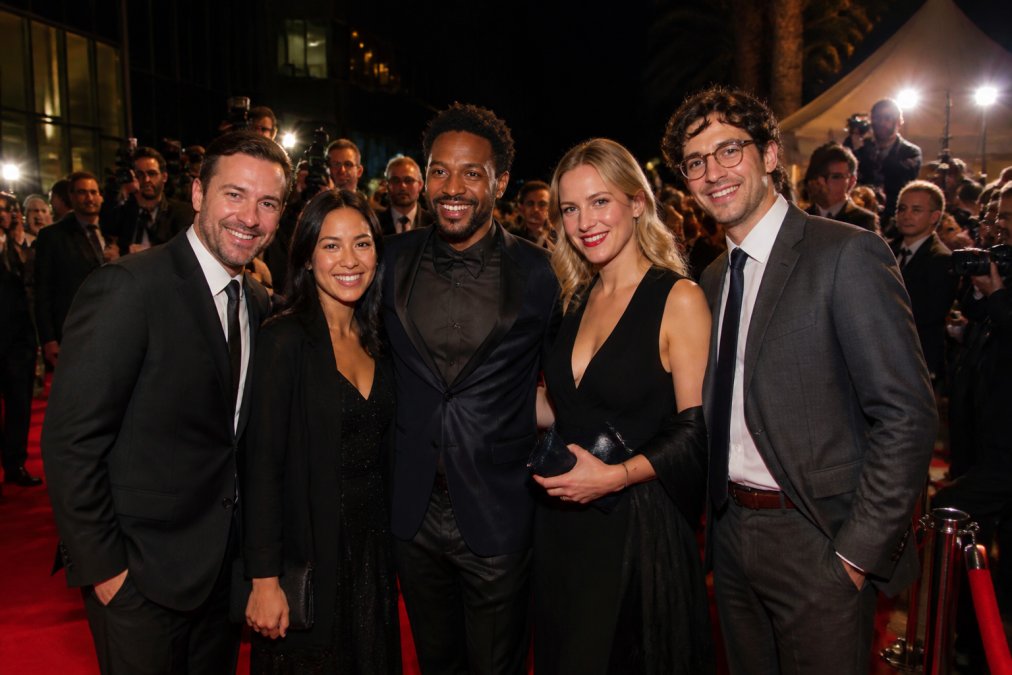
Enhance Corporate Events for Film Premieres: 2026 Guide
Table of Contents
How a Corporate Event Photo Booth Rental Elevates Guest Experience
Crisis Management and Contingency Planning for Film Premieres
Last Updated: September 20, 2026
Setting the Premiere Date and Building the Event Timeline
The premiere date is the anchor every other decision hangs from, and for most film premieres it should be set 12 to 16 weeks before the screening. That window gives you room to lock a venue, secure talent, and run a press campaign without paying rush fees.
Work backward from the screening night. A common approach is to map four phases: announcement, logistics lock, press push, and event week.
Weeks 12-16 out: Confirm the date, book the venue, and send save-the-dates to VIPs
Weeks 8-11: Finalize the guest list, book photo booth and catering vendors, submit press credentials
Weeks 4-7: Lock the run of show, brief staff, and ship invitations
Weeks 1-3: Confirm attendance, rehearse the screening, and stage the red carpet
This is where most planners lose control. They treat the timeline as a checklist instead of a dependency map. If the venue isn't locked, you can't print invitations. If the guest list isn't final, you can't brief security.
Pro TipBuild in a two-week buffer before event week. Something always slips, and a buffer absorbs the slip without forcing overtime on your production crew.
Venue Selection, Capacity, and Four-Walling Logistics
Venue capacity should be set at roughly 70% of the room's stated maximum, because premieres need circulation space for the red carpet, press line, and reception. A room that holds 500 seated guests comfortably handles about 350 for a premiere with arrivals and photos.
Four-walling is a film distribution term for renting a theater outright rather than splitting ticket revenue. For a corporate premiere, four-walling gives you full control over the schedule, the branding, and the guest experience. You pay a flat fee and keep the room.
Key logistics to confirm before signing:
Load-in windows and freight elevator access
Power capacity for lighting, projection, and photo booth equipment
A dedicated screening room separate from the reception space
Parking or drop-off for talent and press vehicles
Event Safety Alliance guidance on crowd management is worth reviewing before you finalize capacity numbers.
How a Corporate Event Photo Booth Rental Elevates Guest Experience
A corporate event photo booth rental turns a passive screening into an active, shareable experience. Guests leave with branded keepsakes, and your marketing team gets a stream of user-generated content from the night.

Photobooth NYC builds open-air booths with custom color grading to match a film's palette or a brand's guidelines. Every booth includes glam filters, custom-branded print templates, instant prints, and digital sharing by text, email, or QR code. That last part matters for buzz generation: guests post within minutes, not days.
The company operates two tiers. Tablet-based systems move people through fast for social-first sharing. Professional-grade camera systems with studio lighting produce editorial-quality output. Photobooth NYC has 20 years of live event production experience, so setups happen inside strict venue load-in windows.
Watch OutSkipping a dedicated attendant is the most common mistake at premieres. Without someone managing the line, guests queue for 20 minutes, and the booth becomes a bottleneck instead of an amenity.
Red Carpet Event Branding Ideas That Generate Buzz
Red carpet event branding ideas work best when they extend past the carpet itself. The step and repeat is the obvious piece, but the strongest premieres treat every touchpoint as a branded moment.
Consider these placements:
A step-and-repeat wall sized to the press line, with the film title and studio logo
Branded photo booth backdrops that match the film's color palette
Custom print templates carrying the release date
Digital frames guests can share on social platforms
Green room branding for talent interviews
The goal is consistency. A guest should recognize the film's visual identity from the moment they step out of the car to the moment they post their photo.
Guest List, Invitation Management, and Digital Ticketing
Invitation management for a premiere runs on tiers, and each tier gets different access. Press, talent, executives, and general guests all need distinct credentials.
Digital ticketing simplifies this. A QR-code system lets you scan guests at check-in, track attendance in real time, and avoid the paper-list chaos that slows entry. Many planners now pair digital ticketing with a guest check-in app that flags VIPs for a separate, faster lane.
Tier 1: Talent, studio executives, and press with full red carpet access
Tier 2: Industry guests and partners with screening and reception access
Tier 3: General attendees with screening access only
Send invitations four to six weeks out, and set an RSVP deadline at least 10 days before the event. That gap gives you time to adjust catering and seating.
Press, Media Accreditation, and the Press Line
Media accreditation should open three to four weeks before the premiere and close at least a week out. That cutoff lets you print credentials, assign positions on the press line, and brief photographers on the run of show.
The press line needs its own choreography. Talent walks the carpet, pauses at marked positions, and moves through in a sequence you control. Without a designated premiere host guiding arrivals, the line stalls and photographers miss shots.
A press kit should be ready before accreditation closes. Include the film synopsis, cast and crew bios, high-resolution stills, and contact details for follow-up. Distribute it digitally to reduce printing costs and make updates easy.
Working with an Experiential Marketing Agency for Premieres
An experiential marketing agency handles the parts of a premiere that fall outside traditional event planning: brand activation, audience engagement, and measurable campaign design. For a corporate premiere tied to a product launch, that expertise matters. But the agency's real value is not strategy decks, it is absorbing the coordination load that otherwise lands on your internal team.
What the agency actually owns
A well-scoped engagement splits the premiere into three workstreams, and the agency typically owns two of them:
Creative and activation: concept, branded environments, talent integration, and the guest journey from arrival to exit
Production and vendor management: AV, staging, lighting, catering, photo capture, and load-in scheduling under one production lead
Distribution and press: usually retained by the studio or in-house comms team, with the agency supporting assets and logistics
Get this split in writing before you sign. The most common failure mode is an agency that sells creative but subcontracts production, which reintroduces the fragmented-vendor problem you hired them to solve.
How agencies price premiere work
Most agencies quote one of three ways, and the structure tells you how they think about risk:
Flat project fee, predictable for you, but the agency pads the number to cover scope creep
Fee plus pass-through production costs, you see vendor invoices, but you carry the overage risk
Retainer plus performance bonus, common when the premiere is tied to a measurable launch goal
A common pattern is a flat creative fee with production billed at cost plus a management percentage. Ask for the management percentage in writing; it is the line item planners most often miss when comparing bids.
The questions that separate a real partner from a deck
Who is the on-site production lead, and have they run a screening with a press line before?
Which vendors are in-house versus subcontracted, and who holds the certificates of insurance?
What is the change-order process when the studio adds a talent appearance 72 hours out?
What does the post-event report include, raw attendance data, social metrics, or just a highlight reel?
That last question matters. An agency that only delivers a highlight reel is selling you content, not measurement. If your premiere is tied to a product launch, you need the raw numbers.
Where the agency model breaks down
For premieres under roughly 200 guests with a single screening and reception, a full agency engagement often costs more than it returns. At that scale, a strong event producer plus specialized vendors, photo booth, AV, catering, usually delivers the same guest experience for less coordination overhead. Bring in an agency when the premiere is one node in a larger campaign, when multiple markets are running simultaneously, or when the brand activation needs to be measurable against a launch target.
Pro TipAsk the agency to walk you through a past premiere's run of show, not its case study. The run of show reveals whether they understand press-line timing, talent holds, and screening cues, the operational details a strategy deck never shows.
Event Safety Alliance guidance on production planning is a useful cross-check when you review an agency's production plan for crowd flow and load-in safety.
Crisis Management and Contingency Planning for Film Premieres
Crisis planning for a premiere covers three scenarios: weather, technical failure, and crowd issues. Each needs a written plan and a named owner.
For technical failure, confirm your AV team has a contingency for projection, and book a photo booth with a trained attendant who stays all night and handles issues on the spot. For crowd issues, staff the entrance with trained event security who can redirect overflow. For weather, have a covered arrival area and a plan to move the red carpet indoors.
Key TakeawayThe most valuable contingency covers anything a guest will notice within 30 seconds: the projection, the sound, and the photo booth, which is why a dedicated on-site attendant matters.
Run a full rehearsal the day before. Walk the press line, test the screening, and confirm every vendor's arrival window. FEMA's event planning resources offers useful templates for contingency documentation.
Post-Premiere Data Analytics and Sustainability
Most premiere guides stop at the closing credits. The two areas that separate a premiere that generated buzz from one that generated measurable results, and the two areas almost no competitor covers, are post-event analytics and sustainability planning. Both should be designed before the event, not bolted on after.
Building the measurement plan before the event
The mistake is deciding what to track the week after. If you have not instrumented the event, the data does not exist. Set the measurement plan when you lock the run of show, and assign an owner to each metric.
Metric | What to Track | How to Capture It | Why It Matters |
|---|---|---|---|
Attendance rate | Check-ins vs. RSVPs | QR scan at entry | Measures invitation accuracy and no-show rate |
Social reach | Shares, mentions, hashtags | Platform analytics plus a unique event hashtag | Gauges buzz generation and earned media |
Photo engagement | Booth sessions, print count, digital shares | Booth backend | Shows attendee experience and content yield |
Press pickup | Articles, broadcast segments, syndication | Media monitoring service | Tracks media value against accreditation spend |
Cost per attendee | Total event cost divided by verified check-ins | Budget reconciliation | Benchmarks the premiere against future events |
A common pattern is to set a target before the event, for example, a defined number of social shares per attendee or a press-pickup goal, so the post-event report has something to measure against. Without a target, every number looks acceptable.
What the numbers actually tell you
The attendance rate is the most underused metric. A premiere that invites 400 and checks in 180 is not a failure of the guest experience, it is a failure of invitation timing or list quality. Compare the check-in rate by tier: if Tier 3 general attendees no-show at a much higher rate than Tier 1, your RSVP process or reminder cadence needs work.
Photo engagement is the closest proxy for guest satisfaction you will get without a survey. If guests are not using the booth, the booth is either in the wrong location, understaffed, or off-brand. Cross-reference booth sessions against the run of show, a dip during the reception usually means the booth is competing with food or the bar.
Press pickup should be reconciled against accreditation. If you credentialed 40 outlets and 12 published, the press line choreography or the press kit is the likely culprit. Review the press kit against what actually got quoted.
Sustainability as a planning constraint, not a slogan
Sustainability works best when it is treated as a constraint on vendor selection, not a separate initiative. The decisions that matter are made at contract time:
Digital-first invitations and credentials cut paper and printing, and they make last-minute guest changes trivial
Modular, reusable backdrops and signage replace single-use printed pieces; specify reusable materials in the vendor contract
Local and seasonal catering reduces transport emissions and often reduces cost
Waste diversion at the venue requires confirming the venue has separate recycling and compost streams before you sign, many do not
EPA guidance on reducing event waste outlines practical steps, and the key takeaway for planners is that diversion rates depend on venue infrastructure you cannot retrofit on event day.
Key TakeawayThe most valuable post-premiere deliverable is not a highlight reel. It is a one-page report that ties attendance, social reach, photo engagement, press pickup, and cost per attendee to the targets you set before the event, plus a short list of what you would change next time.
Run the analytics review within two weeks of the premiere, while the vendor invoices and social data are still fresh. The findings feed directly into the next launch's timeline and budget.
Frequently Asked Questions
What elements are essential for a professional film premiere event?
A professional film premiere needs a locked event timeline, a venue with proper screening room acoustics and projection, a managed red carpet with step and repeat, press accreditation and media check-in, guest list verification with digital ticketing, and a post-screening reception with VIP hospitality. Technical requirements include a technical rider for projection and sound. Staffing covers ushering, event security, and check-in. Each element connects to the next, so a delay in press line management cascades into the screening start time.
How can a corporate event photo booth rental improve guest engagement at film premieres?
A corporate event photo booth rental gives guests an interactive activity during the reception while capturing branded content they share on social media. Booths with custom color grading and branded print templates match the film's palette, turning every photo into a marketing asset. Attendants keep lines moving so guests do not wait, and digital sharing by text, email, or QR code extends buzz generation beyond the room. Instant prints double as take-home keepsakes that keep the premiere top of mind.
What are the best red carpet event branding ideas for a corporate film premiere?
Use a step and repeat backdrop with the film title, studio logo, and sponsor marks positioned for press photography. Add branded props, custom color grading on photo booth output, and signage that matches the film's visual identity. Consider a branded green room for talent, logo projections on the venue facade, and QR codes on invitations that unlock a digital press kit. Keep branding consistent from the press line through the post-screening reception so guests and media see one cohesive look.
How do you manage red carpet logistics for corporate film events?
Map the red carpet flow before event day: arrival point, step and repeat position, press line spacing, and entry into the screening room. Assign a red carpet manager to move talent through in timed intervals, with a handler for each VIP. Media accreditation should be verified in advance so the press line does not bottleneck. Build 15 to 20 minutes of buffer between the last arrival and the screening start. Confirm event security covers both the carpet and the reception area.
