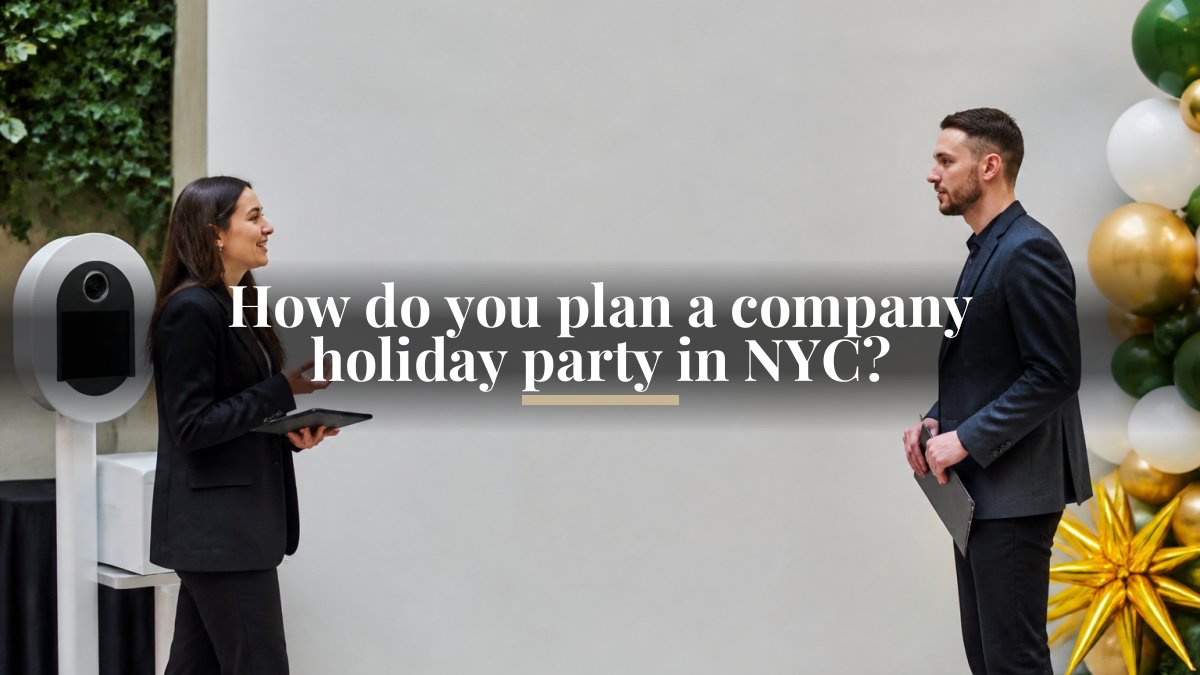
How do you plan a company holiday party in NYC?
Last Updated: October 25, 2026
Quick Summary
Company holiday party planning in NYC requires selecting a venue that fits your guest count, confirming a realistic timeline of eight to twelve weeks, locking in entertainment and catering, and managing logistics like insurance requirements and load-in windows. Start with a detailed checklist and brief all vendors on timing and expectations to keep the event on track.
- Start planning eight to twelve weeks before your target date to book top venues and secure entertainment without rushing.
- A 100-person cocktail party fits comfortably in 1,500 square feet, while the same group seated for dinner needs 2,500 to 3,000 square feet.
- Confirm final headcount with your caterer two weeks before the event, as most require a guaranteed minimum.
- Ask every vendor for a Certificate of Insurance naming your venue as additional insured, and collect these at least two weeks out.
- Assign three roles on event day: a vendor greeter at load-in, a timeline keeper, and a troubleshooter with authority to approve small spends.
Table of Contents
- Start with a Company Holiday Party Planning Checklist
- Build Your Company Holiday Party Timeline
- Select a Venue That Fits Your Guest Count and Budget
- Plan Corporate Holiday Party Entertainment
- Finalize Corporate Holiday Party Ideas and Theme
- Manage Food, Beverage, and Catering Details
- Handle Logistics and Venue Requirements
- Confirm All Details Two Weeks Before
- Frequently Asked Questions
Start with a Company Holiday Party Planning Checklist
Planning a company holiday party in NYC requires coordination across multiple moving parts. You need to nail the basics: date, venue, guest count, budget, entertainment, food, and logistics. A solid checklist keeps you from forgetting critical details as the event approaches.
Here's what to track from start to finish:
- Confirm budget and secure leadership approval
- Select date and check venue availability
- Book venue and finalize capacity
- Plan entertainment options (photo booth, DJ, activities)
- Arrange catering and bar service
- Send save-the-date and formal invitations
- Confirm final headcount two weeks out
- Arrange transportation if needed
- Review venue requirements (insurance, load-in times, parking)
- Brief all vendors on timing and expectations
- Conduct final walkthrough one week before
- Prepare contingency plans for weather or last-minute changes
A company holiday party planning checklist removes guesswork. You'll catch missing pieces before they become problems on event day.
Build Your Company Holiday Party Timeline
The timeline for a company holiday party depends on your guest count and venue complexity. Start planning eight to twelve weeks before your target date.
Here's a realistic timeline:
12 weeks before: Set your date, establish budget, and identify the decision-maker who approves spending. Confirm your guest count range (minimum and maximum).
10 weeks before: Start venue tours. Visit three to five options in your preferred neighborhoods or near your office. Take photos and notes on capacity, parking, load-in access, and available dates.
8 weeks before: Book your venue. Confirm the rental agreement, insurance requirements, and exact load-in and strike windows. Request a floor plan.
6 weeks before: Lock in entertainment. If you want a photo booth, book it now, premium vendors fill up fast during the holiday season. Confirm catering and bar service.
4 weeks before: Send save-the-date notices. This builds excitement and helps you gauge early interest.
2 weeks before: Send formal invitations with RSVP deadline. Finalize headcount with your venue and caterer.
1 week before: Conduct a final walkthrough with your venue contact. Confirm all vendor arrival times and setup requirements.
2-3 days before: Brief all vendors on timing, parking, load-in procedures, and contact information for day-of questions.
Day of: Arrive early. Walk through the space with your venue coordinator. Greet vendors as they arrive and confirm setup is on track.
A realistic timeline prevents last-minute scrambling. You'll book better vendors and negotiate better rates when you plan ahead.
Select a Venue That Fits Your Guest Count and Budget
Venue selection shapes everything else about your event. The right space sets the tone, accommodates your guests comfortably, and makes logistics manageable.
Start by understanding your numbers. A seated dinner requires more space per person than a cocktail reception. A 100-person cocktail party fits comfortably in 1,500 square feet. The same 100 people seated for dinner needs 2,500 to 3,000 square feet to avoid feeling cramped.
Next, identify your preferred neighborhood. Manhattan venues cluster in Midtown, Lower Manhattan, and Brooklyn. Each offers different vibes and price points. Midtown tends toward corporate hotels and event spaces. Lower Manhattan offers industrial lofts and rooftop venues. Brooklyn brings trendy restaurants and converted warehouse spaces.
Consider these venue types:
- Hotel ballrooms: Reliable, full-service, built-in catering and bar. Best for large groups (150+ guests).
- Rooftop venues: Stunning views, weather-dependent, often require private catering.
- Restaurant private dining: Intimate, built-in food and bar, limited to smaller groups (50-100 guests).
- Event spaces and lofts: Flexible, blank-canvas feel, require separate catering and bar setup.
- Museum or cultural spaces: Unique backdrop, higher rental costs, strict rules on food and setup.
When you tour venues, ask about these logistics:
- Freight elevator access and load-in window length
- Parking availability for your guests and vendors
- Insurance and certificate of insurance (COI) requirements
- Whether they allow outside vendors (crucial for entertainment)
- Breakdown and strike time allowed
- Power outlets and WiFi availability
- Restroom capacity and location
- Lighting and sound system basics
NYC venue spotlights and event planning guidance can help you narrow your options. Explore Event Planning to discover NYC venue options suited to your holiday celebration.
Plan Corporate Holiday Party Entertainment
Entertainment sets the mood and keeps guests engaged. Discover Manhattan party entertainment options specifically suited to corporate holiday celebrations. The right choice depends on your crowd, space, and budget.
Photo booths are a proven draw for holiday parties. Guests love the instant gratification of prints they can take home or share digitally. A professional photo booth with a trained attendant keeps lines moving and ensures quality throughout the night.
Corporate Event Photo Booth Rental is a popular choice for NYC companies. A trained attendant on site all night makes the difference. They manage flow, help guests with props, troubleshoot technical issues, and keep the experience running smoothly.
Other entertainment options to consider:
- Live DJ or band: Creates energy, encourages dancing, requires dedicated space and power.
- Cooking class or mixology workshop: Interactive, memorable, requires instructor and kitchen or bar setup.
- Casino games or lawn games: Team-building feel, works for cocktail receptions, requires floor space.
- Trivia or scavenger hunt: Low-cost, engages smaller groups, works alongside other entertainment.
Combine entertainment with your venue layout. A rooftop space works well with a DJ and photo booth. A restaurant private dining room suits a cooking class or trivia game. An industrial loft accommodates multiple activities.
See 5 Creative Photo Booth Ideas for Holiday Parties for specific concepts that engage corporate guests. Learn How to Create an Unforgettable Photobooth Experience at Your Corporate Gala to understand how premium photo booth setups elevate executive celebrations.

Finalize Corporate Holiday Party Ideas and Theme
A theme is not just decor. It drives your venue shortlist, your catering format, your entertainment mix, and how inclusive the night feels for a workforce with different backgrounds, diets, mobility needs, and comfort level with alcohol. Pick the theme early enough that it shapes vendor contracts rather than getting bolted on two weeks out.
Start with the guest profile, not the mood board
Before you browse themes, write down three things about your invite list:
- Size and seating style. A 60-person seated dinner in a private dining room supports a formal theme. A 300-person cocktail reception in a Manhattan loft or a Brooklyn warehouse space supports a high-energy, standing-room theme.
- Cultural and religious mix. December is not one holiday for every employee. A theme built entirely around one tradition can leave part of the team on the outside. Many planners land on a "winter celebration" or "end-of-year" frame that lets guests opt into the specifics.
- Alcohol expectations. If a meaningful share of your team does not drink, a theme built around a signature cocktail program will feel off. Build in a strong zero-proof menu from the start rather than as an afterthought.
Themes that hold up in NYC venues
- Winter celebration (non-denominational): Silver, white, and deep green decor, a hot cocoa and zero-proof cider station, and a photo booth with snowflake overlays and winter props. Works in hotel ballrooms, Midtown event spaces, and Long Island banquet halls alike.
- Ugly sweater / cozy casual: Low decor cost, high participation, best for teams under about 100 in a restaurant private dining room or a relaxed Brooklyn venue. Pair with a photo booth and a hot-food station rather than a plated dinner.
- Decades night: A DJ-led 80s or 90s theme pairs naturally with a dance floor and a photo booth. Confirm the venue's sound restrictions and neighbor considerations before you commit.
- Masquerade or black-tie gala: Fits museum and cultural spaces and upscale hotel ballrooms. Higher decor and rental cost, stricter venue rules on open flame, confetti, and load-in.
- Give-back theme: A service project or charity component instead of a big production. Works well for teams that prefer purpose over party and pairs with a simple reception and a photo booth for the memory piece.
Build inclusion into the theme, not around it
This is where most holiday party guides stop, and where a well-run party separates itself:
- Dietary coverage. Ask your caterer for a documented plan for vegetarian, vegan, gluten-free, nut-free, halal, and kosher-style requests, plus a labeled buffet so guests can serve themselves confidently. Collect dietary notes on the RSVP, not at the door.
- Alcohol-free options. A zero-proof cocktail, a good NA beer, and a sparkling water station should be visible and attractive, not hidden at the end of the bar. This also supports employees who are pregnant, in recovery, or driving home.
- Mobility and accessibility. Confirm step-free entry, elevator access to the event floor, accessible restrooms, and seating for guests who cannot stand for long periods. Ask the venue directly; do not assume.
- Sensory and social comfort. A quieter lounge area, a coat check, and a clear schedule of programmed moments (toasts, awards, entertainment) let guests who find large parties draining pace themselves.
- Religious and cultural sensitivity. Avoid scheduling the party on a major holiday or observance, and let guests know the dress code and any themed elements in advance so no one feels singled out.
Tie the theme to your entertainment and photo booth
Once the theme is set, brief every vendor on it. A photo booth works hardest when the custom-branded overlays and templates match the theme and carry your company logo, so the prints double as branded keepsakes. For corporate groups, ask about lead and email capture at the booth so the images can feed a post-event recap or an internal newsletter. Share the theme with your caterer so the menu and bar read as one experience, and with your DJ so the music arc matches the room.
Manage Food, Beverage, and Catering Details
Food and drink are the backbone of any holiday party. Guests remember the experience through what they ate and drank.
Decide on your catering format:
- Seated dinner: Formal, full meal, higher cost per person, works for 50-150 guests.
- Cocktail reception: Passed hors d'oeuvres and stationary food stations, higher energy, works for any group size.
- Hybrid: Cocktail hour with passed appetizers, then seated dessert and drinks. Balances formality and engagement.
When selecting a caterer, ask about:
- Menu options and dietary accommodations (vegetarian, vegan, gluten-free, allergies)
- Bar service (open bar, limited bar, wine and beer only)
- Staffing (servers, bartenders, coat check)
- Setup and breakdown time
- Equipment they provide (tables, linens, serviceware) versus what you source separately
Bar service deserves special attention. An open bar encourages mingling and relaxation. A limited bar (wine, beer, signature cocktails) controls costs. Some venues include basic bar service in their rental; others require you to hire a separate bartender.
Confirm final headcount with your caterer two weeks before the event. Most caterers require a guaranteed minimum, so accuracy matters for your budget.
Handle Logistics and Venue Requirements
NYC venues have specific requirements that affect your event day. Plan for these early.
Insurance and Certificate of Insurance (COI): Most venues require you to carry general liability insurance or provide a COI from your company. Ask your venue for their insurance requirements upfront.
Load-in and strike windows: NYC venues have tight load-in windows, often 2-4 hours before your event. Confirm this window with your venue. Brief all vendors on the exact time they need to arrive and be set up. Strike (breakdown) windows are equally tight, sometimes 1-2 hours after your event ends. Plan accordingly.
Freight elevator and parking: High-rise venues require freight elevator access for equipment. Book the elevator in advance. Confirm parking availability for your guests and vendors. Some venues charge for parking; others offer complimentary spaces.
Power and WiFi: Confirm available power outlets for entertainment equipment and charging stations. Test WiFi strength, especially if your photo booth uses digital sharing or your DJ streams music.
Restroom capacity: For large groups, restroom availability matters. Ask your venue about restroom locations and capacity. If you're over 150 guests, consider renting portable restrooms.
Accessibility: Confirm ADA accessibility for guests with mobility needs. Ask about elevator access, accessible restrooms, and accessible parking.
Manhattan Event Photo Booth Guide for Hosts covers logistics specific to photo booth setup at NYC venues, including freight elevator coordination and load-in planning.
Confirm All Details Two Weeks Before
The two-week mark is when planning turns into execution. It is also the last realistic window to catch a budget overrun, a missing COI, or a logistics gap before change fees and rush charges start. Treat this as a formal review, not a check-in call.
Run a line-by-line budget reconciliation
Pull every signed contract and quote and reconcile against your approved budget. Most corporate holiday party budgets in NYC break into these categories:
- Venue rental or minimum spend. Many venues set a food-and-beverage minimum rather than a flat rental fee. Know which one you signed and how close you are to hitting it.
- Catering and bar. Per-person pricing plus staff, rentals (tables, linens, serviceware), and any passed-appetizer upgrades.
- Taxes and service charges. New York City and Long Island venues and caterers typically add sales tax and an administrative or service charge on top of the quoted per-person rate. Ask for the all-in number, not the menu price.
- Gratuity. Confirm whether gratuity is included in the service charge or expected separately, and how it is distributed to staff.
- Entertainment. Photo booth, DJ or band, and any activity vendors, each with their own contract terms.
- Decor and florals. Often the easiest line to trim if you are over budget.
- Transportation and parking. Guest shuttles, valet, or garage validation if you are offering them.
- Contingency. Hold back a reserve for last-minute additions, overtime, and the surprises that always appear.
If the all-in number is over budget, cut scope now, not on event day. Reducing a bar package or trimming a decor line two weeks out is far cheaper than discovering an overage after the final invoice.
Confirm every vendor in writing
Contact each vendor and get written confirmation of:
- Exact arrival time, load-in entrance, and setup location
- Day-of contact name and mobile number
- Certificate of insurance (COI) naming the venue as additional insured, if the venue requires it
- Parking instructions and any freight elevator booking
- Equipment list and power or space needs
- Breakdown and strike window, and who is responsible for removal
For the photo booth, confirm the footprint, the power draw, the attendant's arrival time, and the custom overlay artwork so there is time for a proof and a revision. Confirm whether lead and email capture is turned on and where the data goes after the event.
Lock the day-of run of show
Build a single timeline and share it with the venue, caterer, entertainment, and your internal team:
- Venue access and vendor load-in begins: [time]
- Photo booth and entertainment set and tested: [time]
- Guest arrival and coat check opens: [time]
- Welcome remarks and toasts: [time]
- Dinner or heavy hors d'oeuvres service: [time]
- Entertainment and open floor: [time]
- Last call and closing remarks: [time]
- Event ends and strike begins: [time]
Assign three roles on your team: a vendor greeter at the load-in door, a timeline keeper, and a troubleshooter with authority to approve small spends. Give each a printed copy of the run of show and the vendor contact sheet.
Close the risk and safety loop
- Alcohol policy. Confirm with the venue and caterer how service is cut off, whether a licensed bartender is required, and how you will handle visibly intoxicated guests. Many companies circulate a brief conduct reminder before the event.
- Emergency plan. Know the venue's exits, the nearest hospital, and who on your team is the point of contact if something goes wrong. Confirm the venue's own emergency procedures.
- Guest travel. Send a reminder with transit directions, parking details, and the arrival window. If you are running a shuttle, confirm pickup times and the last return trip.
- Weather contingency. For rooftop or outdoor-adjacent spaces, confirm the indoor backup plan and who makes the call to move inside.
Plan the post-event follow-up now
Decide before the party how you will measure it. Simple metrics work: attendance versus RSVP, a short post-event survey, budget versus actual, and a count of photos shared or leads captured at the booth. Schedule the debrief for the week after so feedback is fresh, and note what you would change for next year while it is still vivid.
Manhattan Event Photo Booth Guide for Hosts covers logistics specific to photo booth setup at NYC venues, including freight elevator coordination and load-in planning.
Planning a corporate holiday party in NYC is complex, but a clear timeline, a solid checklist, and confirmed vendor details make it manageable. Entertainment like a photo booth with a trained attendant keeps guests engaged and gives them a keepsake to take home. When you're ready to book, check availability for your date and get a quote for the package that fits your event.
Frequently Asked Questions
How far in advance should you plan a company holiday party?
Start planning 8-12 weeks ahead for a company holiday party in NYC. This gives you time to secure a venue, book entertainment like a photo booth, arrange catering, and send save-the-dates. For larger events over 100 guests, begin even earlier. If your preferred date is during peak holiday season (mid-November through December 23), book entertainment and venue 10-14 weeks out, slots fill quickly during this window.
What should be included in a company holiday party planning checklist?
Your checklist should cover: venue selection and deposit, guest count and RSVPs, catering and bar service, entertainment (photo booth, DJ, games), décor and theme, invitations and communications, parking or transportation logistics, insurance and venue requirements, a backup plan for weather or technical issues, and a post-event thank-you. Assign owners to each item and set deadlines tied to your overall timeline so nothing slips through.
How do you choose entertainment for a corporate holiday party?
Consider your guest count, venue space, and event goals. A photo booth works well for most corporate events because it captures memories, encourages mingling, and creates instant shareable content, plus guests get prints and digital files. For a 50-person office gathering, a photo booth alone may be enough. For 200+ guests, combine a photo booth with a DJ or background music. Ask potential entertainment vendors about their experience with similar-sized corporate events and whether they provide on-site support the entire event.
What are some company holiday party ideas for different team sizes?
For small teams (under 50), an intimate dinner or cocktail reception with a photo booth creates a personal touch. Mid-sized groups (50-150) benefit from a mix of food stations, team activities, and entertainment. Large corporate events (150+) work best with a structured flow: cocktail hour, seated dinner or buffet, entertainment (photo booth, games, or performances), and dancing. Themes like Winter Wonderland, tropical escape, or a retro holiday vibe add energy. The key is matching the activity level and venue style to your team's culture and preferences.

